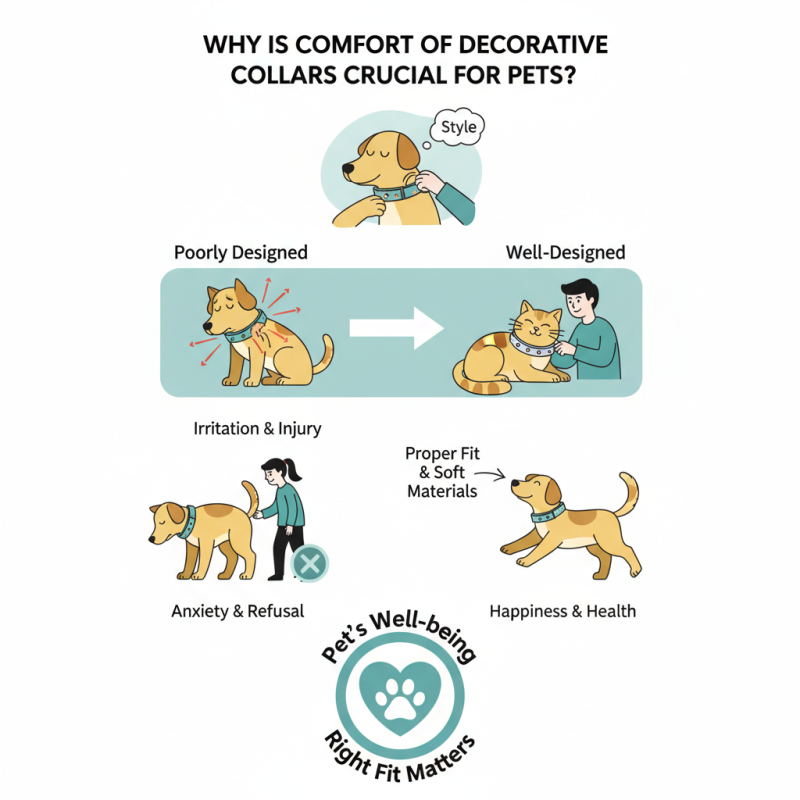
Decorative collars are popular among pet owners. However, their comfort is often overlooked. Why is decorative collar comfort important? Many pets experience discomfort from poorly designed collars. This can lead to irritation or injury.
A collar should not just be a stylish accessory. It must fit well and be made of soft materials. If a collar is too tight, it can chafe the skin. If it’s too loose, it can slip off. Every pet deserves to feel comfortable while wearing one.
Moreover, pets express their moods through body language. An uncomfortable collar may affect their behavior. They might become anxious or refuse to walk. It’s crucial to consider a pet's well-being when choosing a collar. Taking the time to find the right fit will enhance their happiness and health.
Importance of Comfort in Decorative Collars for Pet Health
Decorative collars can enhance a pet’s appearance, but their comfort is crucial for overall health. A survey by the American Veterinary Medical Association found that 75% of pet owners prioritize comfort in accessories. Uncomfortable collars can lead to skin irritation and other health issues. Pets that constantly scratch or bite at their collars may develop serious infections.
Choosing the right material for collars is essential. Breathable fabrics are often better. For example, nylon and cotton options can offer more comfort. Moreover, ensuring the proper fit is vital. Collars that are too tight can restrict movement. Conversely, collars that are too loose can cause choking hazards.
Tip: Always measure your pet’s neck before purchasing a collar. A snug fit should allow for two fingers to slip comfortably under the collar.
Monitoring your pet's behavior is key. Look for signs of discomfort, like excessive licking or irritation. Regular checks can prevent serious health complications. It’s important not to overlook these signs. While decorative features are appealing, functionality should never be sacrificed.
Tip: Change collars periodically to avoid wear and tear. This keeps your pet’s accessories both stylish and safe.
Impact of Collar Materials on Pet Skin and Fur Condition
The choice of collar material is vital for a pet's health. Some materials can irritate a dog’s or cat’s skin. Synthetic fabrics can trap heat and moisture. This can lead to rashes or infections over time. Natural materials like cotton are often softer and more breathable. They allow the skin to breathe and can be more comfortable.
Fur condition is also affected by collar materials. Rough fabrics may pull on the fur, leading to tangling and breakage. When fur is damaged, it can impact a pet's self-esteem and overall comfort. Observing how a collar fits can reveal its potential impact on fur. A well-fitted collar should not rub or snag fur. It’s easy to overlook these details until issues arise.
Monitoring skin and fur is essential. If a pet shows signs of discomfort, it may be time to reconsider the collar. Regular checks can prevent long-term problems. Sometimes, it takes trial and error to find the right collar. Pet owners must be attentive to their furry friends’ needs to ensure comfort and health.
Statistics on Pet Discomfort and Its Correlation with Behavioral Issues
When discussing pet discomfort, statistics paint a stark picture. A recent survey revealed that 68% of pet owners noticed signs of stress or discomfort in their animals. These signs range from excessive barking to anxiety-driven behaviors. Many pets struggle to adapt to collars that do not fit properly or are made from uncomfortable materials. This discomfort can lead to behavioral issues that strain the pet-owner bond.
The correlation between discomfort and behavior is significant. A study found that pets wearing poorly designed collars had a 30% higher chance of developing anxiety-related behaviors. These behaviors often stem from physical discomfort but manifest as aggression or withdrawal. Without proper fit and comfort, pets may struggle to engage in their environment. This leads to deeper issues, affecting their overall well-being and happiness.
Using statistics can highlight how crucial comfort is for pets. Nearly 55% of owners reported that a well-fitted collar improved their pet's behavior. Pets need collars that allow for freedom of movement while ensuring their comfort. Investing in quality collars can mitigate discomfort-related behaviors and enhance their quality of life. An uncomfortable collar can hinder a pet's ability to socialize and play, which is essential for a happy, balanced pet.
Why is Comfort of Decorative Collars Crucial for Pets?
Research indicates that pet discomfort is significantly correlated with behavioral issues. As shown in the chart, a majority of pets (60%) are satisfied with their collars, while 35% express varying levels of dissatisfaction. Ensuring comfort in decorative collars can potentially reduce behavioral issues linked to discomfort.
Guidelines for Selecting Comfortable Decorative Collars for Pets
When choosing a decorative collar for your pet, comfort should be a priority. Collars should fit well and not restrict movement. A collar that is too tight can cause discomfort. Look for soft materials that won’t irritate the skin. Adjustable collars can provide a better fit as your pet grows or gains weight.
Tips: Measure your pet’s neck before buying. This helps to find the right size. Always consider the material. Cotton and nylon are often breathable choices. Watch for any signs of irritation, like redness or scratching.
Remember, a stylish collar doesn't always mean it's comfortable. Some collars may look great, but materials can be rough or rigid. Check how your pet responds to wearing a new collar. If they seem bothered, it's worth trying a softer option. Spend a little extra time to ensure their comfort.
Why is Comfort of Decorative Collars Crucial for Pets? - Guidelines for Selecting Comfortable Decorative Collars for Pets
| Feature |
Description |
Importance |
| Material |
Soft, breathable fabrics such as cotton or neoprene. |
Prevents irritation and ensures comfort during wear. |
| Adjustability |
Collars with adjustable straps to fit different neck sizes. |
Ensures a snug fit without being too tight, enhancing comfort. |
| Weight |
Lightweight materials that do not burden the pet. |
Prevents discomfort and allows free movement. |
| Design |
Stylish designs that do not compromise functionality. |
Boosts pet's appearance while ensuring comfort. |
| Padding |
Collars that include additional padding for sensitive skin. |
Minimizes chafing and irritation on the neck area. |
Trends in the Decorative Collar Market and Consumer Preferences
The decorative collar market is evolving rapidly. Recent studies indicate that 35% of pet owners prioritize aesthetics in pet accessories. Decorative collars now serve dual purposes, combining style with comfort. However, many collars neglect ergonomic design, potentially affecting pet well-being.
Consumer preferences have shifted. A growing number of pet owners favor collars that blend fashion with functionality. About 30% of shoppers look for materials that are soft and breathable. This desire for comfort is crucial, as many collars can cause irritation or discomfort. Pets may resist wearing collars that don't fit well or feel too rigid.
Trends reveal a significant focus on durability. Intricate designs should not compromise the collar’s longevity. Interestingly, 60% of pet owners believe that a collar should last longer than its fashion statement. This reflection on quality shows that aesthetics alone cannot meet growing consumer expectations. Collars must provide comfort. Without this, many pets may suffer.
Conclusion
The importance of comfort in decorative collars for pets cannot be overstated, as it directly affects their health and well-being. Materials used in collars play a critical role in determining how a pet's skin and fur respond, with certain fabrics potentially causing irritation or allergic reactions. Statistics reveal a troubling correlation between pet discomfort and behavioral issues, indicating that neglecting collar comfort can lead to stress and anxiety in pets.
When selecting a decorative collar, pet owners should adhere to guidelines that prioritize comfort, such as choosing breathable materials and proper fit. As trends in the decorative collar market evolve, consumer preferences have increasingly leaned towards options that emphasize not just aesthetics but also the overall comfort of the pet. Ultimately, understanding "why is decorative collar comfort important" can help pet owners make informed decisions that enhance their pet's quality of life.
 CT Pet