CT Pet
Holiday collars can make a pet look festive, but decoration should never outweigh comfort or safety. A soft red bow, tartan band, or small seasonal charm can add warmth without creating unnecessary bulk. The best choices stay lightweight, securely attached, and easy to remove. They should not block identification tags, limit movement, or press against the neck.
So, what holiday decor suits pet collars? Fabric accents often work well because they are flexible and less likely to scratch. Sewn patterns, stitched snowflakes, and narrow velvet strips can offer seasonal style without loose parts. For dogs that dislike accessories, a simple printed collar may be more suitable than a dangling ornament. Cats require extra care, especially with elastic pieces, bells, ribbons, and anything that could catch during climbing. Breakaway collars are generally recommended for cats because they can release under pressure.
Reliable advice begins with observing the individual animal. Check the collar beneath the chin and behind the ears. Look for redness, fur tangling, chewing, or repeated pawing. Remove the decoration immediately if discomfort appears. Veterinary guidance also supports regular fit checks, since growing puppies and changing coats can alter collar pressure.
Not every attractive design is practical. Glitter may shed, and tiny charms can become tempting chew objects. Even a carefully chosen accessory can fail during rough play. That is worth admitting. Holiday styling should be tested briefly at home before photos, walks, or gatherings. Comfort remains the most trustworthy measure of festive success.
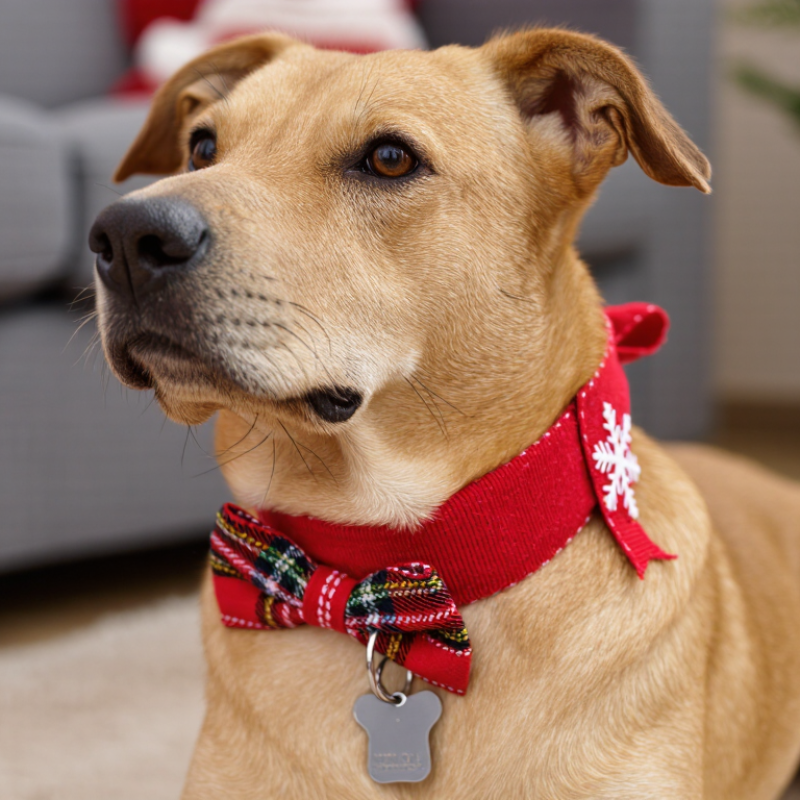
The safest holiday collar decorations are lightweight, soft, and firmly attached. Fabric bows, felt snowflakes, and reflective holiday strips work well for daily walks. They add color without covering identification tags or tightening the collar. Avoid sharp metal charms, loose glitter, and small detachable ornaments. These pieces may irritate skin or become choking hazards. The American Pet Products Association reported that 66% of U.S. households owned a pet in its 2023–2024 National Pet Owners Survey. More pets also mean more owners need practical, safety-focused accessories. However, major industry reports do not measure collar decorations directly. That gap deserves attention.
Tips: Choose decorations under a few grams. Check stitching before every walk. Keep bells away from sensitive ears. Reflective trim is useful after sunset, especially on dark streets. Battery-powered lights can look festive, but they need secure housing and regular inspection. Never attach wires around a collar. A soft holiday bandana may be safer than a dangling ornament. It should allow two fingers between the collar and the neck. The decoration must not block breathing, movement, or tag visibility.
In my experience, simple designs stay comfortable longer. Overdecorated collars often twist, collect moisture, or distract the animal. A small red bow may look perfect in photographs, yet fail during rain. Test the collar indoors for ten minutes first. Watch for scratching, head shaking, or unusual hesitation. Remove the decoration immediately if these signs appear. Safety is less decorative, but more dependable.
Holiday collar decor should look cheerful without changing how the collar works.
Choose smooth, non-splintering materials, such as tightly woven fabric, soft silicone, or rounded felt. A stitched snowflake or small fabric bow is usually gentler than hard, dangling pieces.
Avoid brittle plastic, exposed wire, rough glitter, and loose tinsel. These materials can scratch skin or become choking hazards.
Check the collar against your pet’s neck. You should slide two fingers underneath, with no twisting or rubbing.
For attachments, prefer lightweight pieces that sit flat and use secure stitching or a short, closed loop.
Nothing should cover identification information or interfere with the buckle, bell, or breakaway release. On cats, a properly fitted breakaway collar is often safer than a fixed design. The right choice depends on the animal and veterinary advice.
Test every decoration indoors first. Watch for chewing, pawing, redness, or unusual movement.
I once underestimated how quickly a curious pet could pull at a decorative charm. That small oversight changed my checklist.
Now I tug each attachment gently, inspect seams, and remove decorations during sleep or unsupervised play.
Reflective fabric can improve visibility during winter walks, yet it cannot replace a leash or supervision.
Decorations should stay dry when possible. Damp fabric can trap dirt against the skin.
Recheck the fit after grooming or weight changes.
Holiday collar decorations should match a pet’s size, strength, and daily behavior. Small dogs and cats need lightweight accents that will not pull on their necks. Soft fabric bows or flat felt shapes usually work better than heavy ornaments. Larger dogs can handle broader decorations, but the collar must still sit comfortably and securely. Measure the collar area, then check for rubbing after a short indoor trial.
Temperament matters just as much. Calm pets may tolerate gentle bells or dangling shapes, while nervous pets often dislike movement and sound. Active chewers need simple, firmly attached decorations with no loose parts. Avoid sharp edges, long ribbons, and anything that could catch on furniture. I once chose a beautiful hanging decoration for an energetic dog, but it twisted during play. The design looked festive, yet it was clearly impractical. That mistake still influences my choices.
Tips: Introduce decorations slowly and watch body language. Remove them if your pet scratches, freezes, shakes, or avoids movement. Check stitching and fasteners before every walk. Keep decorations away from food and water bowls. A quiet pet may still become stressed outside, so test the collar in a familiar room first. When uncertain, ask a qualified veterinarian or certified behavior professional for guidance. Simpler can be safer.
| Pet Size | Typical Temperament | Recommended Holiday Decoration | Suitable Materials | Decoration Weight | Best Color Approach | Safety and Fit Notes |
|---|---|---|---|---|---|---|
| Very Small Under 5 kg |
Often sensitive to bulk, noise, and unfamiliar textures. | A narrow festive ribbon, a small fabric bow, or one lightweight decorative charm. | Soft cotton, felt, fleece, or smooth fabric with securely stitched edges. | Less than 1% of the pet’s body weight; keep the decoration as light as possible. | High-contrast colors that remain visible without using reflective or flashing elements. | Avoid bells, long ribbons, loose glitter, and small detachable pieces. Check the collar frequently for twisting. |
| Small 5–10 kg |
Playful and active, but may dislike dangling accessories. | A flat holiday-patterned collar cover or a firmly attached fabric bow. | Washable fabric, soft webbing, and flexible, non-sharp decorative stitching. | Lightweight; the collar should not become noticeably stiff or unbalanced. | Red, green, cream, or blue accents with a simple two-color pattern. | Keep all decorations away from the throat area. Ensure two fingers can fit comfortably between the collar and neck. |
| Medium 10–25 kg |
Usually adaptable, with activity levels ranging from moderate to high. | A flat seasonal band, a securely sewn bow tie, or a short decorative tab. | Durable nylon or polyester webbing, felt, canvas, and reinforced thread. | Light to moderate, with no hard edges or parts that can swing into the pet’s face. | A balanced holiday palette; brighter trim can improve visibility during evening walks. | Use secure stitching rather than easily removed clips. Remove the decoration for unsupervised crate time or outdoor play if it snags. |
| Large 25–40 kg |
More capable of carrying structured accessories, but may pull, scratch, or roll outdoors. | A wide seasonal collar band, flat embroidered motif, or low-profile fabric bow. | Heavy-duty webbing, canvas, durable felt, and weather-resistant thread. | Moderate, evenly distributed across the collar rather than concentrated on one side. | Contrasting trim or reflective fabric can help the collar remain visible in low light. | Avoid rigid ornaments, sharp metal pieces, and decorations that could catch on branches or fencing. |
| Very Large Over 40 kg |
Often strong and energetic; accessories should prioritize stability over size. | A broad fabric collar cover, large embroidered design, or minimal flat seasonal patch. | Reinforced webbing, canvas, durable polyester, and securely finished embroidery. | Moderate and low-profile; avoid anything that alters the collar’s balance or movement. | Bold contrasting colors and reflective accents without excessive surface decoration. | Inspect attachment points before every use. Remove decorative items during running, rough play, swimming, or training. |
| Any Size Calm and tolerant |
Usually accepts new clothing or accessories after gradual introduction. | A fabric bow, flat seasonal pattern, or soft decorative band. | Breathable fabric, soft webbing, and washable thread. | Lightweight to moderate, provided the pet moves normally. | Choose colors that complement the coat while keeping identification details readable. | Introduce the item for short periods and watch for scratching, freezing, chewing, or repeated shaking. |
| Any Size Nervous or noise-sensitive |
May react to jingling, flashing, unfamiliar textures, or changes around the neck. | A plain fabric cover or printed seasonal pattern with no dangling parts. | Soft, quiet fabric and smooth stitching; avoid rigid attachments. | Minimal; the safest choice may be no added decoration. | Muted, familiar colors with no blinking or highly reflective surfaces. | Stop using the decoration if stress signals appear. Never force a pet to wear an accessory. |
| Any Size Chewers or highly active pets |
Likely to pull at, mouth, scratch, or catch decorative items during movement. | A flat sewn-in pattern or seasonal color on the collar itself. | Durable webbing and tightly finished fabric with no exposed cords. | Very light and streamlined. | High-visibility contrast is preferable to layered embellishments. | Avoid ribbons, bells, beads, sequins, and detachable charms. Supervise wear and inspect for fraying. |
General guidance: Decorations should never interfere with breathing, eating, vision, movement, identification tags, or the collar’s release and adjustment features. Remove any accessory that becomes damaged, wet, tangled, or uncomfortable.
Holiday collar decor looks charming when it stays light, secure, and comfortable. In my experience, soft fabric bows and flat felt shapes work better than hard ornaments. They move less and do not press against the neck. Avoid glitter, sharp edges, bells, and small pieces that could break loose. Keep identification tags visible.
Measure the collar around your pet’s neck before adding anything. You should fit two fingers between the collar and skin. Lay the collar flat on a table. Position the decoration on the outer side, away from the buckle and tag ring. Stitch it firmly with several small loops, or use a short, tightly secured fabric tie. Do not use long ribbons. They can catch on furniture or paws. Trim every loose thread.
Check it closely. Tug the decoration gently. It should not slide, twist, or separate. Place the collar on your pet and watch their movement for five minutes. Look for scratching, head shaking, or rubbing. Remove it immediately if any discomfort appears. A common mistake is adding too much decoration. I once underestimated how quickly a lightweight bow could shift during play. Recheck the attachment after walks, naps, and excited indoor activity. Never leave a decorated collar on an unsupervised pet if the design has detachable parts.
The chart compares common collar-decoration attachment methods using a five-point practical checklist: secure fit, low profile, removability, no loose parts, and clear access to the identification tag. A higher score indicates a better overall fit for supervised holiday use.
Holiday collar decorations can add seasonal charm, but comfort and safety must guide every choice. Choose lightweight, securely stitched decorations with smooth edges. Avoid loose beads, long ribbons, sharp pieces, and anything that can catch on furniture. A collar should remain snug enough for safety, yet allow two fingers between the collar and the pet’s neck. Check the fit again after grooming or seasonal weight changes.
Supervision matters most during the first few minutes. Watch for scratching, head shaking, chewing, coughing, or unusual silence. These signs may show irritation, fear, or an attachment problem. Never leave a decorated collar on during unsupervised sleep, crate time, outdoor play, or contact with other animals. Keep decorations away from food bowls and water, where softened materials can break apart. Pet-care professionals generally recommend removing accessories when a pet cannot be watched directly.
Decoration removal should be calm and gradual. Inspect the collar for frayed thread, dampness, trapped fur, or damaged fasteners. Remove the decoration immediately if it becomes loose or changes the collar’s shape. Even careful owners can overlook small cracks after a busy celebration. I would rather choose a plain collar than keep a festive detail that causes discomfort. Wash and dry the collar according to its material, then store decorations separately for inspection before next season.
Choose lightweight fabric bows, felt snowflakes, soft bands, or reflective strips. They should feel smooth. Avoid sharp charms, loose glitter, and small ornaments.
Keep it very light, preferably only a few grams. Heavy decorations can twist the collar and bother the pet during walks.
Use secure stitching or a short, closed loop. The decoration should sit flat and stay away from buckles, releases, and identification tags.
Slide two fingers between the collar and the neck. The collar should not rub, twist, block breathing, or restrict movement.
Yes. Let your pet wear it indoors for ten minutes. Watch for scratching, chewing, head shaking, coughing, or unusual hesitation. I used to overlook this step.
Reflective fabric can make a pet easier to notice after sunset. It does not replace a leash, supervision, or careful walking.
Remove them during unsupervised sleep, crate time, outdoor play, or contact with other animals. Remove them immediately if they loosen, become damp, or change the collar’s shape.
Inspect stitching, seams, fasteners, trapped fur, and damp fabric before each use. Wash the collar as directed by its material, then store decorations separately. Small cracks are easy to miss.
Choosing holiday accents for a pet collar should balance festive style, comfort, and safety. What holiday decor suits pet collars depends on the animal’s size, personality, and daily activities. Lightweight bows, soft fabric charms, flat felt shapes, and securely stitched seasonal details are generally more suitable than heavy, sharp, dangling, or easily breakable decorations. Select smooth, non-toxic materials and attachments that cannot pinch skin, restrict movement, or become choking hazards. Small pets and cautious animals may need minimal, flexible decorations, while larger, calmer pets can often wear slightly more noticeable accents under supervision.
To attach holiday collar decor, place it away from the buckle, identification tags, and leash connection, then secure it firmly with reinforced stitching or a properly fitted fastening method. Check that the collar remains comfortable and does not interfere with breathing, eating, walking, or grooming. Inspect the decoration regularly for loose threads, damage, moisture, or signs of chewing. Remove it during sleep, unsupervised time, rough play, swimming, and whenever the pet shows irritation or discomfort. Clean and store decorations properly after the season ends so they remain safe for future use.