CT Pet
Choosing attractive accessories for a pet should never begin with appearance alone. The real question is, “How to choose safe bling for pets” without creating hidden risks? A sparkling collar, charm, or harness may look harmless in a product photo. In daily use, however, loose stones can catch on crate doors, branches, or another animal’s teeth. Safety depends on construction, fit, supervision, and your pet’s individual habits.
This guide uses practical pet-care principles and advice commonly supported by veterinarians, groomers, and responsible manufacturers. We will examine smooth edges, secure attachments, breathable materials, non-toxic finishes, and reliable breakaway features. Check each item by hand. Rub the surface with a fingertip. If it scratches skin or snags fabric, reject it. Measure the neck carefully, leaving room for two fingers, but not enough space for a paw to slip through. Small parts deserve special attention. They can become choking hazards when decorations loosen.
Watch your pet during the first few uses. Look for rubbing, redness, repeated scratching, head shaking, chewing, or unusual hesitation. Remove the accessory immediately if any sign appears. Never assume a premium price guarantees safe design. That belief can fail. Product descriptions may omit weight, coating details, or attachment strength. Ask the seller for material information and care instructions. When allergies, breathing problems, recent surgery, or unusual behavior are involved, consult a qualified veterinarian before buying. A little sparkle is enjoyable. Comfort and dependable safety matter more.
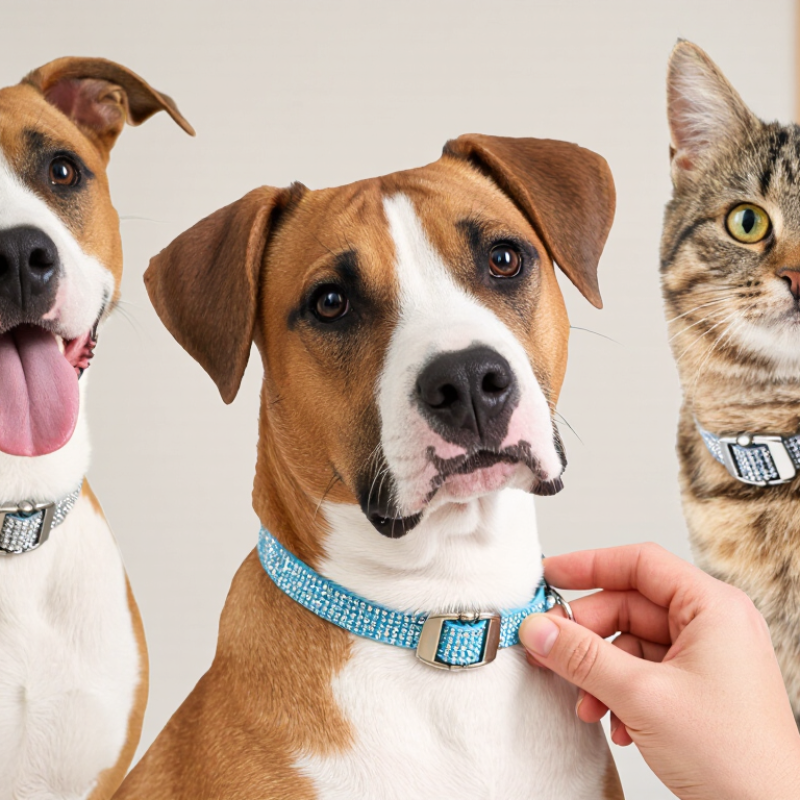
Safe pet bling begins with comfort, not sparkle. The APPA 2023–2024 National Pet Owners Survey reports 86.9 million U.S. households own pets. FEDIAF’s 2024 Facts and Figures estimates 139.7 million European households share life with pets. At that scale, tiny design flaws matter. Choose smooth, lightweight decorations with secure stitching. Avoid sharp edges, loose beads, toxic coatings, and long dangling pieces. A decorative collar should not restrict breathing, rubbing, eating, or natural movement. Breakaway designs can reduce entanglement risks, especially for cats. Fit matters too. You should slide two fingers between the collar and the neck.
Tips: Inspect every seam and attachment before use. Shake the item gently. If anything rattles loose, remove it. Watch your pet wearing it indoors for ten minutes. Look for scratching, head shaking, redness, drooling, or unusual silence. Remove the accessory during sleep, unsupervised play, swimming, and crate time. Keep a simpler collar available.
Material claims deserve skepticism. “Non-toxic” alone explains very little. Ask whether the metal contains nickel, whether dyes are tested, and whether small parts can detach. Veterinary guidance commonly favors supervised use and regular skin checks, but individual tolerance differs. A pet may accept a soft charm yet panic when it clicks against a bowl. I have seen owners judge safety by appearance; that is an easy mistake. The safest choice may look less glamorous, and that can feel disappointing.
How to Assess Materials, Size, Weight, and Comfort
Decorative pet accessories should be judged like small pieces of equipment, not toys. During fitting checks, I look for smooth edges, secure joins, and washable surfaces. Stainless steel, silicone, and tightly woven fabric are often practical choices. Avoid coatings that flake, strong odors, or loose stones that a curious pet could swallow. Materials matter greatly.
Size must allow normal movement without creating a snag point. For collars, measure the neck and keep enough room for two fingers. A charm should stay clear of the throat, paws, and jaw. Weight deserves equal attention, since a heavy pendant can strain a small pet’s neck. Choose the lightest decoration that remains visible and secure.
My own mistake was trusting a sturdy clasp without checking its pressure against fur. That detail caused rubbing.
Comfort shows through behavior, including scratching, head shaking, freezing, or avoiding stairs. Let the pet wear the item for five minutes, then inspect red marks, trapped hair, and damp skin. Check stitching and fasteners before every use, especially after washing. Do not leave decorative items on an unsupervised pet until comfort and security are proven. A veterinary professional or qualified groomer can assess sensitive skin or unusual movement. I still recheck fit after grooming because shorter fur changes pressure points. Small changes matter.
The APPA 2023–2024 National Pet Owners Survey reports that 66% of U.S. households own a pet. That variety matters when choosing bling. A small dog may suit a lightweight, rounded charm on a soft harness. A larger dog can handle broader reflective trim for evening walks. Fit matters. The decoration should not swing near the mouth, paws, or eyes.
Cats need a different approach. Choose a breakaway collar with minimal, smooth decoration for indoor movement. Avoid long chains and noisy pieces that may catch during climbing. Rabbits and guinea pigs are more delicate. Decorative harnesses should stay light, flexible, and free from sharp edges. FEDIAF’s 2024 European Facts and Figures report counted 139 million pet-owning households, showing how widely different companion animals shape purchasing needs.
Activity changes the answer, too. For photos or calm indoor events, flat crystal details may be suitable. For running, hiking, or daycare, reflective stitching is more practical than dangling ornaments. Remove decorative pieces before swimming or rough play.
Check the clasp after every outing. I have sometimes judged an accessory by appearance first, which is the wrong instinct. A secure fit, clear movement, and comfortable behavior matter more than sparkle.
Keep it quiet. Watch the pet’s breathing, scratching, and gait for several minutes after fitting.
Choosing safe bling for pets requires more than attractive sparkle. APPA’s 2023–2024 National Pet Owners Survey found that 66% of U.S. households owned a pet. That scale makes product quality important, not decorative. Check the material disclosure first. Prefer clearly identified stainless steel, silicone, or tested textiles. Avoid sharp edges, loose stones, exposed wires, and strong chemical odors. Independent testing for lead, cadmium, and nickel is valuable evidence.
Fit should allow two fingers between the accessory and your pet’s neck. It should stay secure without pressing the skin. For collars, a breakaway feature can reduce snagging risks. Keep dangling parts short and lightweight. The AVMA’s pet ownership research shows millions of dogs and cats live in homes, yet their body shapes differ widely. One size rarely fits every animal. Measure the neck, chest, or paw area directly.
Test durability before daily use. Pull gently at seams, clasps, and decorations. Watch for cracked coating after bending. Inspect the item after ten minutes of wear, then again after play. Remove it during sleep, chewing, bathing, or unsupervised outdoor activity. My first checklist focused too much on appearance. That was a mistake. A safer choice may look less impressive, but it should remain comfortable, intact, and easy to remove. APPA’s 2024 State of the Industry Report recorded U.S. pet spending of about $152 billion, but higher spending does not guarantee safer products. Evidence matters more than presentation.
How to check quality, fit, durability, and safety features before use
This 100-point screening model organizes the practical checks recommended before using pet accessories. Safety features receive the highest weighting because loose parts, entanglement, restricted movement, and accidental ingestion can create immediate risks. Always confirm a comfortable two-finger fit, inspect the item regularly, and remove decorative accessories during unsupervised activity, sleep, eating, or active play.
2026 Best Guide: How to Choose Safe Bling for Pets
Introduce pet bling slowly, especially with puppies, cats, or anxious animals. Let your pet sniff it before wearing it. Place it on the collar for one minute, then remove it calmly. Check that two fingers fit between the accessory and the neck. Avoid loose stones, sharp edges, dangling parts, and heavy decorations. A veterinarian or qualified groomer can help assess fit and comfort.
Tips: Watch your pet during the first several sessions. Look for scratching, chewing, rubbing, hiding, coughing, or unusual silence. These signs may indicate discomfort or risk. Never leave decorative accessories on an unsupervised pet, particularly during sleep, travel, or play with other animals. Check the skin under the item daily. Redness, hair loss, swelling, or a strange odor deserves attention from a veterinarian.
Clean bling according to its material. Wipe it with mild soap and warm water, then dry it completely before use. Avoid harsh chemicals, soaking porous materials, or using heat near glued decorations. Inspect clasps, stitching, and stones each week. Replace the item immediately if it cracks, loosens, rusts, or changes shape. A perfect routine is unrealistic; busy days happen. Still, skipping one inspection can become a costly mistake. Safe decoration should remain optional, comfortable, and easy to remove.
How to Introduce, Monitor, Clean, and Replace Pet Bling
| Safety Dimension | Recommended Action | What to Check | Practical Frequency or Timing | Stop-Use Warning Signs |
|---|---|---|---|---|
| Pet and Activity Fit | Match the accessory to the pet’s size, age, coat, temperament, and daily activities. |
|
Before purchase and whenever the pet’s size or routine changes | The item catches on furniture, causes scratching, limits movement, or is repeatedly chewed |
| Materials and Construction | Select smooth, securely attached, pet-appropriate materials with no accessible sharp edges. |
|
At purchase and during every inspection | A stone, bead, thread, clasp, or coating becomes loose, sharp, cracked, or detached |
| Fit and Clearance | Fit wearable items securely without making them tight. |
|
At fitting, after grooming, and after growth or weight change | Persistent redness, hair loss, swelling, coughing, gagging, or difficulty breathing |
| Safe Introduction | Introduce the bling gradually in a calm, supervised environment. |
|
First session and each time a new style is introduced | Repeated pawing, freezing, hiding, excessive shaking, vocalizing, chewing, or agitation |
| First-Day Monitoring | Keep the pet under direct observation while wearing the accessory for the first time. |
|
Continuous supervision during the first session; recheck after removal | Breathing difficulty, vomiting, inability to eat or drink, injury, or suspected swallowing |
| Routine Monitoring | Inspect both the pet and the accessory before and after use. |
|
Before and after every use; more often for active or chewing pets | Any skin lesion, persistent discomfort, damaged hardware, or missing component |
| Cleaning | Clean according to the material and dry completely before reuse. |
|
After visible dirt or moisture; at least weekly during regular use | Persistent odor, mold-like spots, corrosion, peeling finish, or material breakdown |
| Cleaning After Water Exposure | Remove, rinse, and dry the accessory after rain, bathing, swimming, or heavy drooling. |
|
Immediately after water exposure | Rust, trapped moisture, skin irritation, damp odor, or weakened stitching |
| Replacement Timing | Replace based on condition and safety, not only on age. |
|
Inspect monthly for occasional use; inspect more often for daily use | Any structural damage, unsafe fit, detached decoration, or repeated escape from the fastener |
| Emergency Response | Remove the accessory immediately and seek veterinary advice when a serious problem is suspected. |
|
Immediately when symptoms or possible ingestion occur | Choking, breathing difficulty, collapse, severe bleeding, or suspected foreign-body ingestion |
Safety note: Pet bling is decorative and should never compromise breathing, movement, eating, drinking, skin health, or normal behavior. Individual pets may have allergies, medical conditions, or behavioral risks; consult a veterinarian when irritation, injury, or suspected ingestion occurs.
Safety begins with comfort, not sparkle. Choose smooth edges, secure stitching, light materials, and washable surfaces. Avoid loose beads, sharp parts, strong odors, and flaking coatings. Appearance can mislead.
You should slide two fingers between the collar and the neck. The collar must not restrict breathing, eating, rubbing, or movement. Recheck the fit after grooming, because shorter fur can increase pressure.
Stainless steel, silicone, and tightly woven fabric are often practical choices. Still, material claims need checking. Ask whether metal contains nickel and whether dyes were tested. “Non-toxic” is not enough.
Let your pet wear the accessory indoors for five to ten minutes. Watch for scratching, head shaking, freezing, drooling, redness, or unusual silence. Then inspect trapped hair, damp skin, and pressure marks.
Choose a breakaway collar with minimal, smooth decoration. Avoid long chains and noisy pieces. They may catch during climbing or frighten the cat near a food bowl. Keep it quiet.
Small dogs may suit a lightweight, rounded charm on a soft harness. Rabbits and guinea pigs need very light, flexible designs without sharp edges. A heavy pendant can strain a small neck.
Flat details may suit calm indoor events or photographs. Reflective stitching is more useful for running, hiking, or evening walks. Remove dangling decorations before swimming, daycare, or rough play.
Remove them during sleep, unsupervised play, swimming, and crate time. Check every seam and clasp before use. Shake the item gently. If anything rattles loose, remove it immediately.
Remove the accessory and inspect the skin, fur, breathing, and gait. Keep a simpler collar available. If unusual movement or irritation continues, consult a veterinary professional or qualified groomer. My own judgment has been wrong before.
Choosing pet accessories should always begin with comfort and safety rather than appearance. How to choose safe bling for pets depends on selecting non-toxic, pet-friendly materials, smooth surfaces, secure attachments, and a suitable size and weight. Decorations should not restrict breathing, movement, hearing, eating, or natural behavior. Consider the pet’s species, breed, body shape, temperament, and daily activities: lightweight, simple designs may suit active pets, while more decorative pieces may be appropriate only for supervised, calm occasions. Avoid loose parts, sharp edges, choking hazards, and anything that can easily snag on furniture or outdoor objects.
Before use, check stitching, clasps, fasteners, and overall durability, then confirm that the fit is secure without being tight. Introduce the bling gradually and observe for scratching, stress, redness, hair loss, or unusual behavior. Remove it immediately if discomfort appears, and never leave a pet unattended when wearing unfamiliar accessories. Clean the item regularly according to its material, inspect it for damage, and replace it when it becomes worn, loose, cracked, or difficult to clean.
